Air Freight vs Ocean Freight
A shipment delay can hit a business hard. Products stay stuck, customers start asking questions, and warehouses run low on stock. That is why businesses search for “air freight vs ocean freight” before choosing a shipping method. The right choice affects delivery speed, inventory flow, customer trust, and profit margins. One shipping decision can either keep operations smooth or create costly supply chain problems.
Which Shipping Method Works Better for Your Business?
The answer depends on what hurts your business more right now. If slow inventory creates bigger problems, air freight may help more. If rising transportation costs hurt margins harder, ocean freight may fit better. Most businesses compare:
- Delivery timelines
- Shipping costs
- Inventory pressure
- Cargo size
- Customer demand
- Supply chain stability
Why Businesses Compare Air Freight and Ocean Freight So Often?
- Stop production
- Delay ecommerce orders
- Create warehouse shortages
- Increase refund requests
- Hurt customer trust
An Amazon seller running out of inventory may lose product rankings within days. A manufacturer waiting for replacement parts may stop operations completely until cargo arrives.
Why Air Freight Helps Businesses Move Faster?
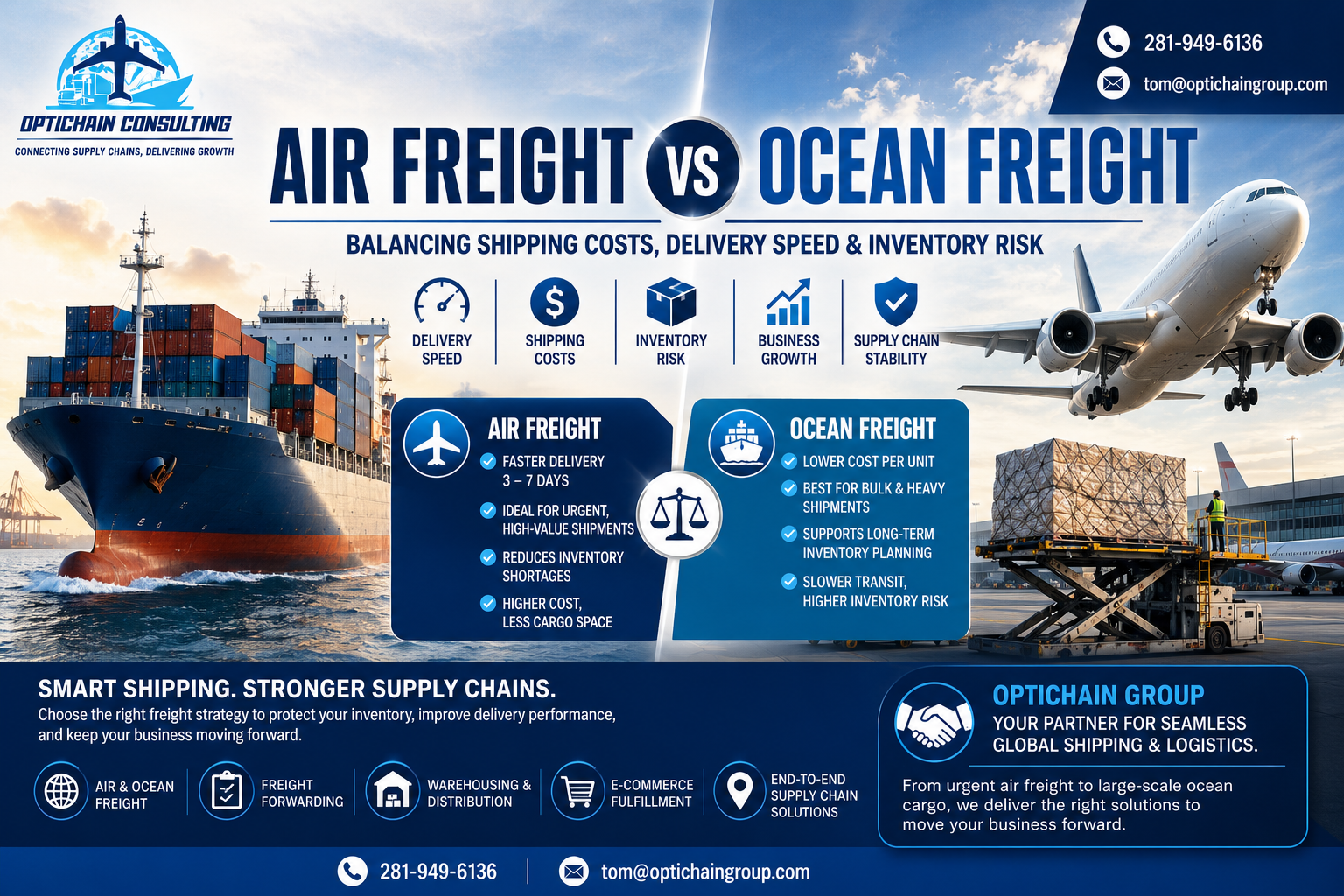
A shipment from Asia to the United States may arrive within 3 to 7 days through air freight, while ocean freight may take 25 to 45 days.
- Inventory shortages
- Seasonal sales spikes
- Product launches
- Emergency restocking
- Time-sensitive orders
Why Ocean Freight Still Handles Most Global Trade?
- Heavy machinery
- Retail inventory
- Furniture
- Construction materials
- Bulk ecommerce products
Ocean shipping supports long-term inventory planning but increases delay risk.
Inventory Risk Creates Bigger Problems Than Businesses Expect
- Empty warehouse shelves
- Late customer orders
- Marketplace ranking drops
- Production slowdowns
- Lost revenue opportunities
Why Businesses Use Both Air and Ocean Freight Together
A lot of growing e-commerce brands now use both air and ocean freight to balance inventory speed with shipping costs. This strategy helps businesses move urgent products faster while still keeping larger inventory shipments more cost-effective.
- Core inventory moves through ocean freight
- Fast-selling products move through air freight
- Reduce stock shortages
- Control shipping costs
The Real Cost Difference Between Air and Ocean Freight
- Less cargo space
- Higher fuel usage
- Tighter schedules
- Weight-based pricing
Air Freight or Sea Freight Comparison
| Business Situation | Option |
|---|---|
| Emergency inventory restocking | Air Freight |
| Heavy industrial equipment | Ocean Freight |
| High-value lightweight products | Air Freight |
| Large retail shipments | Ocean Freight |
| Tight deadlines | Air Freight |
| Long-term planning | Ocean Freight |
Why Freight Forwarding Plays Such a Big Role?
- Customs paperwork
- Carrier coordination
- Cargo routing
- Shipment tracking
End Summary
Frequently Asked Questions
Air freight works better for urgent inventory.
Because it is cost-effective for bulk shipping.
It causes shortages and lost sales.
Yes, many businesses combine both.
To manage customs and logistics smoothly.
Need Help with Freight Planning?
Call or contact Optichain Group for logistics support.